Particulars:
- Language: Spanish
- Area total: 6,211.61 km², subdivided into 9 districts.
- Latitude/ Longitude:
5°12′ S,
80°38′ W
- City Calling code: 73
- Time Zone:
UTC/ GMT-5 |
|
|
Introduction to Piura:
Piura is a city in northwestern Peru. It is the capital of the Piura Region and the Piura Province. The population is approximately 400,000.
It was here that Spanish Conqueror Francisco Pizarro founded the first Spanish city in South America, San Miguel de Piura, in 1532, thus earning the modern day city its Peruvian nickname: "La Primera Ciudad"- meaning: the first city.
Trivia & Quick Points:
-
Founded in 1532 by the Spanish, Piura is the oldest Spanish city in South America.
-
Piura served as the first main port through which the Inca gold the Spaniards had gathered was shipped back to Spain.
-
Piura declared its independance from the Spanish on January 4, 1821.
-
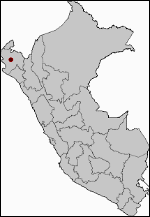
Piura is located in Northern Peru, (see map above), in the Region of Piura, and the Province also known as Piura.
-
World-class surfing is found on Piura's northern coast.
Mancora beach is one of the premier surfing destinations in Peru
among many other prime choices... Big waves, nice breaks, uncrowded
conditions and a growing "surfing
scene" make Piura a hot surfing destination.
Facts & Information:
History:
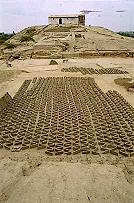 Piura has an especially rich and interesting history. Like most of northern Peru, the territory of Piura had been inhabited by their autochthonous group of natives called tallanes (Carribean origin) and yungas. These people lived without an organization or single leader to rule until the Mochicas eventually took control and the mixture of these evolved into the Vicus Culure. Piura has an especially rich and interesting history. Like most of northern Peru, the territory of Piura had been inhabited by their autochthonous group of natives called tallanes (Carribean origin) and yungas. These people lived without an organization or single leader to rule until the Mochicas eventually took control and the mixture of these evolved into the Vicus Culure.
Centuries later, Piura came under the rule of Tupac Inca Yupanqui, at least for around 40 years and before the Spanish arrived. With the arrival of the Spanish in 1532, the mestizo and creole culture of actual Piura were born.
This mestizo culture includes influences from Spanish Extremadura and Andalucia, African influence due to the arrival of slaves from Madagascar (Malgache slaves), the Chinese coolies that migrated from Canton to work the rice fields and replace the slaves; and also Roma gypsies who came as pirates looking for pearls or as incongite Spanish horsemen.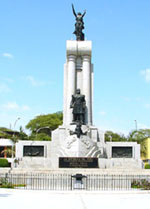
Colonial Legacy:
Piura served as the first main port through which the Inca gold the Spaniards had gathered was shipped back to Spain. Already in 1534, Sebastián de Belalcázar, one of Pizarro's men, left Piura to conquer the Inca bastion in Quito.
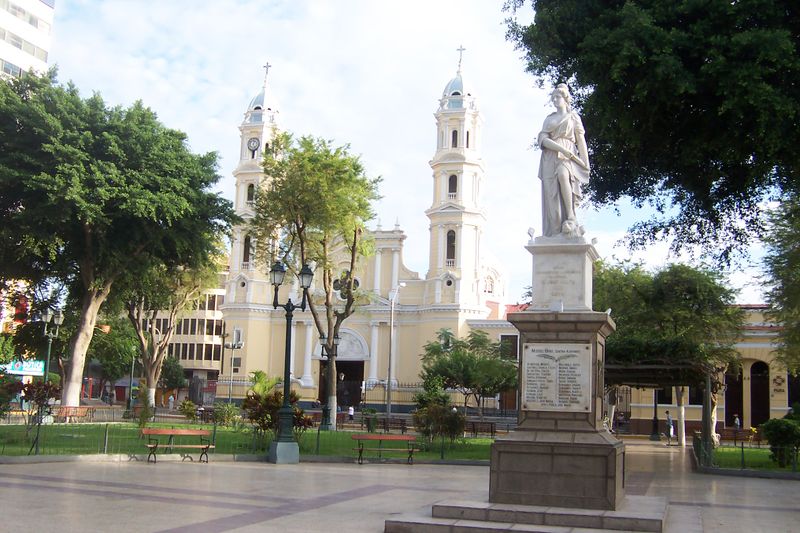
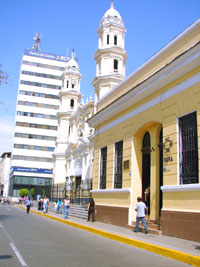
As the most ancient colonial city in Peru, its location was changed three times before it was established on its present location. The cathedral of Piura was built in 1588. The altar is covered in gold leaf and has a painting of Ignacio Merino, a renowned Peruvian artist.
Culture & Folklore
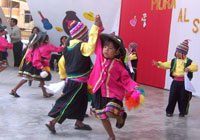 Piura is host to a stunning mestizo culture (the oldest in South America 1532, Piura is the first Spanish city in south America) most famous for gastronomical dishes like Seco de Chavelo (the local dish), Algarrobina drinks, many types of Cebiche and Natilla Sweets. Piura is host to a stunning mestizo culture (the oldest in South America 1532, Piura is the first Spanish city in south America) most famous for gastronomical dishes like Seco de Chavelo (the local dish), Algarrobina drinks, many types of Cebiche and Natilla Sweets.
Popular crafts in Piura include its famous Chulucana Pottery and amazing hats, colorful textiles, and "Silversmith" arts, among many others. The Tondero and cumanana is the traditional music of mestizo Piura and northern parts of Lambayeque.
There are also several famous Peruvian valse that came from these regions (northern Peruvians have their style). "Chicha music", now called Tecnocumbia (originally a Peruvian styled cumbia), is also quite popular all over, as well as Salsa among youngsters.
Travel & Tourism:
Possessing a different Peruvian flavor from the more highly publicized and well known Peruvian destinations such as Machu Pichu, Cusco, or the Amazon rainforest, Piura is a wonderful destination waiting to be discovered by the Peruvian traveler.
Highlights & Features of the City:
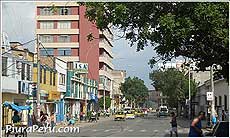 A clean and well managed city, Piura city proper has many tourist attractions.
In addition to its museums, great shopping, and art exhibitions, probably most well known are Piura's myriad of old Spanish architectural style buildings to photograph and visit, among them the many beautiful cathedrals and monuments to its fascinating history. A clean and well managed city, Piura city proper has many tourist attractions.
In addition to its museums, great shopping, and art exhibitions, probably most well known are Piura's myriad of old Spanish architectural style buildings to photograph and visit, among them the many beautiful cathedrals and monuments to its fascinating history.
Other features of the city of Piura include:
-
Piura is home to one of two campuses of the University of Piura. (the second one is in Lima.)
-
The city is also well known for its artisans who weave straw hats and make silverware.
-
A museum commemorating the memory of Miguel Grau, a renowned Peruvian naval officer in the War of the Pacific, is located in Piura.
-
The famous and impressive Plaza de Armas is Peru's oldest park and is located in the heart of Piura. A nice place to visit and popular among families with children, the middle of this park has an interesting marble monument representing freedom, known as "La Pola".
What to Do & See
Your choices are many. Interested in the flora and fauna of the area? Visit the Kurt Beer Ecological Parque. There's also other botanical parks to visit, great birdwatching, and lots of other Peruvian cultural experiences just waiting to happen all around you.
When in Piura, its well advised to visit the Piura tourism Center.
Surrounding Area
To be sure, Piura is a must see city for any history buff, but experiencing the city is just the beginning... For a deeper understanding and true appreciation of Piura, one has to explore the actual region and province itself.
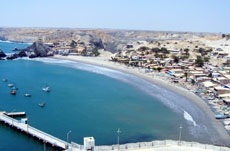
- Some destinations within the Piura region (daytrips and farther) are Catacaos city and Sullana city, where you can enjoy traditional food at great restaurants and shop around and enjoy the rich Peruvian culture.
- You could also check out the nearby small town of Simbila, very popular for its handcrafts and pottery.
- Head to the nearby northern coastline of Peru, known for its steady winds, warm waters, and excellent waves! One of the best known tourist attractions is La Esmeralda beach (also known as Colán beach), where many locals like to go during their holidays, but there is also Yacila and Mancora nearby to explore.
Surfing the Northern Coast
According to the adventure travel company Destination 360: "Surfing in Peru is on the rise in terms of popularity, but its roots start with the country’s first civilizations.
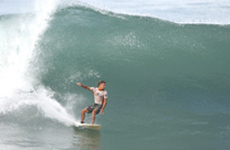 As coastal Peruvian empires rose along the shore, they surely depended on the sea for food.
Reed boat fisherman would return to land by riding the waves in ceremonial fashion.
Times certainly have changed, and now Peru surfing, which can be enjoyed year round, is enjoyed on modern boards instead of small reed boats. As coastal Peruvian empires rose along the shore, they surely depended on the sea for food.
Reed boat fisherman would return to land by riding the waves in ceremonial fashion.
Times certainly have changed, and now Peru surfing, which can be enjoyed year round, is enjoyed on modern boards instead of small reed boats.
If you are an experienced surfer, you will undoubtedly enjoy the world-class Peru surfing found on its northern coast, and beginners can find lessons and surf tours that will have them up and riding in no time." Click to learn more about Peru's fantastic surfing opportunities.
- Other excellent beaches include Punta Sal, Organos, Cabo Blanco, and Nunura (some favorites of surfers).
Where to Stay
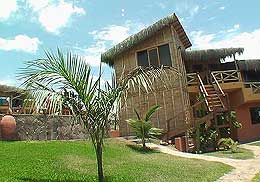 Because Piura is one of Peru's largest cities, there are a good number of different hotels to choose from in the city and surrounding area. Prices are quite affordable, as with most places in Peru, and range in quality from high end luxury to backpacker's hostels. Because Piura is one of Peru's largest cities, there are a good number of different hotels to choose from in the city and surrounding area. Prices are quite affordable, as with most places in Peru, and range in quality from high end luxury to backpacker's hostels.
Most Piura accomodations offer their clients an interesting "Peruvian ambiance", unique to themselves, along with friendly and professional service. (Most Peruvians are quite proud of their regions traditional hospitality.)
In general, all the "modern amenities" of life are standard (or at least offered as options) in most of Piura's hotels (TV, Wifi access, safety deposit boxes, hair dryers, luggage storage, taxi service, telephones, hot water, fresh linens, etc.), with some also offering quality dining or restaurants on premises.
SEE THE LIST OF PIURA AREA
HOTELS HERE
Getting There & Away
-
By Plane:
Piura has an international airport known as the Guillermo Concha Iberico International Airport. It is the second most busy in Peru and is currently served by AeroCondor, LAN Peru, TANS Peru, and Wayra Peru. It is located 2 km from Piura's main square and 130 km from the famous Máncora Resort.
Piura.com recommends comparing various airlines and ticketing agents with our Travel partner Booking Wiz. (see widget on top right of page)
-
By Bus:
National buses run along the Panamerican Highway from Lima to Tumbes & some to the frontier with Ecuador. Ormeño (Lima to Guayaquil daily & Quito weekly), & Transportes Loja (Piura to Loja 3 times daily), have international buses to Ecuador.
Getting Around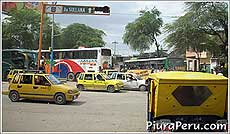
You can get around the city of Piura easiest by taxi or bus, and to its surrounding regions best by bus or rental car.
The 2 bus lines running transport in and around Piura are Transportes Linea and Oltursa. These buses have frequent and regular trips to Mancora, Chiclayo, Trujillo, and Lima.
Here is a helpful list of transportation companies in the city of Piura that lead to different destinations around the region and province of Piura. (In Spanish, courtesy of Piuraperu.com)
|
|
TRAVEL to PIURA!
Use PIURA as your destination city and compare the travel services.
Image Copyright Note
Piura.com is currently seeking royalty free images of the city, region, or province of Piura and the people living in it for use on our webpages.
If you can provide some of these images, or have any questions regarding an image on this site, please click here to read more about our images & copyright policies. |
|